Archives
now browsing by author
Repentance and Faith

It has now become a standard mantra across Christendom that Salvation is by Faith alone. So popular it has become that there is even a convergence between Catholics and Protestants around this concept to the point that it is even being said by many that the Protestant Reformation is over. But the question arises, where does Repentance fit into all of this? Certainly, within a context where the primary message that was carried by Jesus Christ, the Messiah Himself, was “repent ye, and believe the gospel”, it begs the question as to whether something is being missed. The Bible speaks of Messiah’s message as follows:
“Now after that John was put in prison, Jesus came into Galilee, preaching the gospel of the kingdom of God, And saying, The time is fulfilled, and the kingdom of God is at hand: repent ye, and believe the gospel.” (Mark 1:14, 15)
Messiah’s message was clear: repent and believe! Today, people are saying, believe only! Not only was repentance a primary focus of Messiah’s message, it was specifically spoken of as “the gospel of the kingdom of God”. Not only Messiah, but also John the Baptist who was the forerunner who announced Messiah’s coming, preached repentance – “In those days came John the Baptist, preaching in the wilderness of Judaea, And saying, Repent ye: for the kingdom of heaven is at hand.” (Matt. 3:1, 2).
Same message
Repentance was the one thing that was specifically called for as preparation for the “kingdom of heaven”. Some may say that repentance was the message for that time because the kingdom of God was not yet established. But after Christ’s resurrection and ascension the disciples preached the very same message after receiving the outpouring of the Holy Spirit on the day of Pentecost – “Then Peter said unto them, Repent, and be baptized every one of you in the name of Jesus Christ for the remission of sins, and ye shall receive the gift of the Holy Ghost.” (Acts 2:38). Repentance was not only the one requirement as preparation for the kingdom of heaven but it was a condition for “the remission of sins”. Without repentance our sins will not be forgiven!
As if to reinforce the point, Peter, after healing the lame man who was at the temple door pointed out to the people their great sin in killing Jesus Christ, the Son of God and told them: “Repent ye therefore, and be converted, that your sins may be blotted out, when the times of refreshing shall come from the presence of the Lord.” (Acts 3:19). In both cases, Peter was very specific about the sin that the people were guilty of. They had killed Jesus, the innocent, sinless Son of God. The result was that “when they heard this, they were pricked in their heart, and said unto Peter and to the rest of the apostles, Men and brethren, what shall we do?” (Acts 2:37). Peter’s answer was clear: Repent!
Repentance or despair
When one is pricked in the heart over the wrong that they have done, they can repent or despair. The story of two people who denied Jesus illustrates. Peter repented and wept bitterly – “And Peter remembered the word of Jesus, which said unto him, Before the cock crow, thou shalt deny me thrice. And he went out, and wept bitterly.” (Matt. 26:75). Forced by his guilty conscience, Judas despaired and hung himself – “Saying, I have sinned in that I have betrayed the innocent blood. And they said, What is that to us? see thou to that. And he cast down the pieces of silver in the temple, and departed, and went and hanged himself.” (Matt. 27:4, 5). Peter was saved – saved by Jesus’ words to him that drove him to repentance. This is where faith comes in – after Repentance! After sorrow and regret, one can either look to Jesus in faith and be saved or reject Him, our only hope of being saved and despair like Judas and be lost.
After the resurrection, Jesus asked Peter three times, “lovest thou me?” (John 21:17). To this, Peter responded, twice, with great contrition, “Yea, Lord” and the third time, being grieved that Jesus asked him a third time, he humbly replied, “Lord, thou knowest all things; thou knowest that I love thee.” (John 21:17). Jesus accepted Peter’s confession and gave him a commission in His cause to go and help others to be saved, likewise, telling him: “Feed my sheep” (John 21:17).
Message for us at this time
But that was Judas and Peter. What about us? Are we guilty of anything that heinous? The Bible says, yes! We too share the guilt of killing the innocent Son of God and all the innocents that have been killed upon the earth if we reject the prophets of God who are sent to call us to repentance – “ Wherefore, behold, I send unto you prophets, and wise men, and scribes: and some of them ye shall kill and crucify; and some of them shall ye scourge in your synagogues, and persecute them from city to city: That upon you may come all the righteous blood shed upon the earth, from the blood of righteous Abel unto the blood of Zacharias son of Barachias, whom ye slew between the temple and the altar.” (Matt. 23:34, 35).
Do we keep silent when we see injustice? We will be judged as accomplices if we do! One day, we will come face to face with all the deeds that we have done. We are told: “For we must all appear before the judgment seat of Christ; that every one may receive the things done in his body, according to that he hath done, whether it be good or bad.” (2 Cor. 5:10). That is not the end of it, we are told: “As I live, saith the Lord, every knee shall bow to me, and every tongue shall confess to God.” (Rom. 14:11).
Judgement
No one will escape the judgement of God. Not even death will spare anyone. The wicked will be resurrected to face their day in God’s court – “ And I saw the dead, small and great, stand before God; and the books were opened: and another book was opened, which is the book of life: and the dead were judged out of those things which were written in the books, according to their works.” (Rev. 20:12).
At the Second Coming of Christ, there will be two classes of people. Of one set, it is said: “And the kings of the earth, and the great men, and the rich men, and the chief captains, and the mighty men, and every bondman, and every free man, hid themselves in the dens and in the rocks of the mountains; And said to the mountains and rocks, Fall on us, and hide us from the face of him that sitteth on the throne, and from the wrath of the Lamb: For the great day of his wrath is come; and who shall be able to stand?” (Rev. 6:15-17). Of the other set, it is said: “And it shall be said in that day, Lo, this is our God; we have waited for him, and he will save us: this is the Lord; we have waited for him, we will be glad and rejoice in his salvation.” (Isa. 25:9). Now is the time to choose which class we will be in – whether to repent now and look to Jesus Christ in faith and be saved or not to repent now but be forced by circumstances to repent later and despair, when it is too late, and be lost.
Need to repent
Hopefully, we can understand why the most important thing to do is to repent and do it now! We can choose to repent now and be saved, while there is hope or we can wait and be sorry later, when it is too late. One way or another, we all will face our wrong deeds and be sorry – either now or later. The choice is ours.
Martin Luther nailed his ninety-five theses on the door of the Castle Church at Wittenburg, Germany, five hundred years ago to protest the sale of Indulgences – a guaranteed pardon for sins without the need for Repentance. These Indulgences would have guaranteed that many would go to their graves thinking that they were saved when they were not. Martin Luther was touched by the deception that would cause many to be lost. His concern sparked what has come to be known as the Protestant Reformation. Today, people are saying that the Protest is over. Just believe and you are saved. No repentance needed? Has the Devil gone to sleep, and the whole world is being saved – calling upon Jesus – while wickedness abounds? We had better think again. Is there need for another Protest against a new form of Indulgence – Salvation without Repentance? May the Good Lord help us!
“He that hath ears to hear, let him hear” (Matt. 11:15).
- Zerubbabel (Zech. 4:6)
Previous presentations can be found at http://thecommandmentsofgodandthefaithofjesus.com
The Advent Movement and Bible Prophecy
The Advent Movement started with the preaching of William Miller around the year 1831. Based on Miller’s interpretation of Bible prophecy (mainly Daniel 8:14 – “Unto two thousand and three hundred days; then shall the sanctuary be cleansed”), there was an expectation that Christ would return in 1844. With the passing of the time and Christ did not return, Miller gave up, but others continued and later adopted the name Seventh-day Adventists in 1860. Those who continued, accepted the year 1844 as a valid interpretation of the time prophesied by Daniel but held that the event prophesied – the cleansing of the sanctuary, was not the second coming of Christ as was previously thought, but another activity. There has been much debate as to what that other activity is.
In considering the Advent Movement, it’s continuation beyond 1844 and whether or not there is a prophetic basis for it, the following should be considered:
- Prophecy of Messiah’s coming. Daniel was shown the exact time that Jesus Christ, the Messiah, would appear – “Know therefore and understand, that from the going forth of the commandment to restore and to build Jerusalem unto the Messiah the Prince shall be seven weeks, and threescore and two weeks” – Daniel 9:25. Based on the interpretation that a day in the prophecy was equal to literal a year, the exact time of Christ being anointed Messiah was established and was fulfilled accordingly.
- Endorsement of Daniel. Jesus confirmed that Daniel was a prophet – “But when ye shall see the abomination of desolation, spoken of by Daniel the prophet, standing where it ought not, (let him that readeth understand,) then let them that be in Judaea flee to the mountains.” – Mark 13:14.
- Link between Messiah and 2300 days prophecy. Daniel’s prophecy of the time of Messiah’s coming was given as a part of the explanation of a prophecy regarding the cleansing (some say “restoration”) of the sanctuary after it was being trodden down for two thousand three hundred (2300) prophetic days by a power called the “abomination of desolation”.
- Day-for-a-year principle. Up to the time of Christ, the 2300 prophetic days that started at the same time as the prophecy that foretold Messiah’s coming had not yet expired, because Jesus spoke of the destruction of Jerusalem (which had not yet taken place) as being a part of the activity of the “abomination of desolation”, whose treading down of the sanctuary would be addressed by the cleansing (or restoration) of the sanctuary. Hence, the 2300 days duration of the desolating work prior to the cleansing of the sanctuary had not yet finished. The 2300 days must, therefore, also be based on the same interpretation that one prophetic day equals one literal year.
- End point of the 2300 days. On the basis of one prophetic day being equal to one literal year, from the same starting point (457 BC) that identifies the time of Messiah’s appearance (anointing), the 2300 prophetic days end in 1844.
- Cleansing of the sanctuary. God revealed that after 2300 prophetic days (ending in 1844), “then shall the sanctuary be cleansed”. He did not say how long that cleansing process would last.
- Fulfillment of Daniel’s Prophecy. The question is, did such a thing as the cleansing of the sanctuary, as God indicated would have happened, start in 1844 or not? If the Word of God’s prophet is true – and we saw that it was true in relation to the time of Messiah’s coming, then the cleansing of the sanctuary (whatever it is) must have started. What then was the manifestation of it? The answer is that the manifestation of it was the Advent Movement that was calling the world’s attention to it.
- Advent Movement and God’s leading. The Advent Movement that continued beyond 1844 was the only witness calling the world’s attention to the fulfilment of God’s Word that the cleansing of the sanctuary had started. Some people are now claiming that they were misled. If they were misled, then it means God’s Word through His prophet Daniel, which had already proven its validity in relation to Messiah’s coming, was false. Clearly, that was not the case. The Advent Movement was being led by God. One very clear evidence was the fact that God raised up a prophet among them. God said: “If there be a prophet among you, I the Lord will make myself known unto him in a vision, and will speak unto him in a dream.” – 12:16. In 1844, shortly after it was understood that the cleansing of the sanctuary was not the second coming of Christ, Ellen Gould White (née Harmon), one of the Advent believers, had her first of many visions. These visions continued for many years until she died in 1915.
- Endorsement of James White. Among the testimonies that she bore, Ellen G. White had this to say about her husband, James White:
“I was shown that the work was not left in the hands of any one upon earth. Angels of God have charge of the work, and they counsel and direct God’s people through chosen agents, and thus the work moves forward. I was shown that God in his own wise providence raised my husband above dependence and want that his testimony and influence might not be crippled by the galling sense of dependence. . . . . I was pointed back and saw that amid all the hatred and devices of Satan, God had spared the life of my husband, although Satan pressed him sore to take it away a few years since. . . . I saw that God had stayed him on the right hand and on the left that he should not go to extremes. This has not been the work of man, but the mark of God’s hand is seen in it. His work will go forward” – Ellen G. White, Spiritual Gifts (Vol. II) – My Christian Experience, Views and Labors in Connection with the Rise and Progress of the Third Angel’s Message, Battle Creek, Mich., 1860, pgs 282-283.
- Warning against turning away. The prophet also warned against a turning away from the foundation beliefs that were established by the pioneers of the Advent Movement. She said that such a turning away would not be of God. She said: “The enemy of souls has sought to bring in the supposition that a great reformation was to take place among Seventh-day Adventists, and that this reformation would consist in giving up the doctrines which stand as the pillars of our faith, and engaging in a process of reorganization. Were this reformation to take place, what would result? The principles of truth that God in His wisdom has given to the remnant church, would be discarded. Our religion would be changed. The fundamental principles that have sustained the work for the last fifty years would be accounted as error. A new organization would be established. Books of a new order would be written. A system of intellectual philosophy would be introduced.” Ellen G. White, Special Testimonies, Series B, No. 2, pgs 54, 55. {Selected Messages Vol. I, p 204}.
Some persons would interpret Ellen G. White, on some subjects, in ways that would give the impression that she differed from the other pioneers in the beliefs that were generally endorsed by the Advent believers during her lifetime. This was clearly not the case. The 28 “Fundamental Principles of Seventh Day Adventists”, published in the 1889 Year Book (http://documents.adventistarchives.org/Yearbooks/YB1889.pdf) was the defining statement of beliefs of the Seventh Day Adventist Church from 1888 to 1930. These beliefs reflect what Ellen G. White, James White and the other pioneers of the Advent Movement advocated and believed up until 1930, some 15 years after the death of Ellen G. White.
In the final analysis, it is clear that the Advent Movement was raised up by God, in accordance with the prophecy of Daniel. Those who would boldly declare that the Advent Movement was not raised up by God or that the pioneers of the Advent Movement were misled in relation to the positions they conscientiously took that were different from the popular beliefs that existed, should reconsider. Does present truth lie in rejecting the beliefs of the pioneers and returning to some of the beliefs of the other churches that the pioneers had rejected?
At the very minimum, before determining that the pioneers were misled, it would be wise to read their writings and hear what they had to say. The writings of James White, who it was revealed to the prophet, that he was one who was specially led by God, would be a good place to start.
“He that hath ears to hear, let him hear” (Matt. 11:15).
- Zerubbabel (Zech. 4:6)
Previous presentations can be found at http://thecommandmentsofgodandthefaithofjesus.com/
Avoiding confusion in Galatians
Sometimes it is almost painful to see what appears to be an attempt to walk through the raindrops when persons try to explain Paul’s message in the book of Galatians. One simple clarification can assist us in avoiding confusion.
There is much confusion in the popular explanations that are given. On the one hand, there is an assertion that Paul is teaching that New Testament Christians are no longer “under a schoolmaster”, where the schoolmaster in this case is “the law”. But on the other hand there is an unwillingness to appear to be attributing to Paul the advocacy of lawlessness, which clearly would be erroneous.
So, what is the reason for the apparent conflict? We are not under the law but at the same time we are not supposed to be lawless.
The answer lies in the perception of what Paul is speaking about when he refers to “the law”. Many people say that Paul was speaking about the Ten Commandments law. So, they use that interpretation to conclude that New Testament Christians do not need to keep the Sabbath – the fourth of the Ten Commandments. Interestingly, they do not conclude that we are free to disregard any of the other nine.
Sabbath-keepers on the other hand (excepting the Seventh-day Adventist Pioneers), while agreeing with others that Paul was referring to the moral law or Ten Commandments, justify their Sabbath-keeping by saying that Paul was really speaking about a legalistic approach to keeping the commandments as a means to salvation. They conclude that we are no longer under the schoolmaster in the sense that we do not keep the law to be saved. Rather, we keep the law because we are saved. The problem with that is that it gives the impression that before Christ came, people were saved in one way but since Christ came, the way of salvation has changed. Further, since God was the author of the Old Covenant, He would have been the one to have instituted such a faulty approach to salvation by works – the schoolmaster arrangement, and then had to change it.
The Jewish system
Some people will insist that they are not really saying that the way to salvation has changed, even though their argument seems to imply that. So, they appear to be trying to walk through the raindrops.
The need to be trying to balance so delicately (or appearing to contradict oneself) is completely removed if one understands that Paul, in speaking of “the law” was not speaking about moral principles that are applicable universally, and neither was he speaking about the Ten Commandments. Rather, Paul was speaking about the “book of the law” (Gal. 3:10) that summarized the entire system of the Jewish religion. Paul was making a very simple point that the Jewish system was no longer the governing system. The specific aspect of the Jewish system that was in question was circumcision. But Paul went beyond the immediate matter of circumcision to make a general point that the unique elements of the Jewish system were not applicable to Christians as Christians were not required to become Jews.
This point was necessary because prior to Christ’s coming, Gentiles were required to become Jews (proselytes) if they accepted the God of the Jews.
Isaiah 56:3-7 explains that the Jewish religion was open to “strangers” and “eunuchs” but they had to become a part of the Jewish system. This arrangement became a barrier to Jews and Gentiles being equals within that system because God’s purpose was not fully understood. But it was the best arrangement that could have been made at the time because Abraham’s descendants at the time had the revelation of truth handed down to them from generations and provided the best nucleus that could preserve the truth and disseminate it to the pagans around them. But, God revealed to Paul (Eph. 3:1-6) that He wanted Jews and Gentiles to be “fellowheirs” and “of the same body” – a new body, “the church” (verse 10).
Free from enforced system
Paul’s entire Epistle to the Galatians was an effort to correct the notion, which Jewish converts to Christianity were seeking to advance, that Gentile Christians needed to become Jews. The arrangements governing the Jews were not only moral and ceremonial, but they were also civil and included penalties and punishments, even to the extent of the death penalty, for breaches of the legal arrangements. If we understand this, the entire Epistle to the Galatians becomes easy to understand. The Jewish system was “a schoolmaster” – a system of enforced practices that was put in place for a time until Christ should come. After Christ came, there was no more need for an externally enforced system as Christ provided a better revelation of God than that which humanity, in their spiritual state as “children”, had previously been exposed to.
The bottom line is that when Paul speaks about “the law” in Galatians, he is speaking about the Jewish system as a whole, with its unique arrangements for enforcement. He is not speaking about any specific moral principle that may have been a part of those arrangements and which may have been of universal significance. He was not speaking about the seventh-day Sabbath, for example, which existed from creation and was established by God as a reminder that He is the Creator (Gen. 2:2, 3; Ex. 20:8-11). Rather, he was speaking about such things as circumcision, which, in this case, was given specifically to Abraham’s descendants as a sign of God’s promise that God would multiply Abraham’s lineage and make of them a great nation (Gen. 17:4-16).
Within that context, it is easy to understand why Paul spoke of us being made “free”, whereas before, people were “shut up” and “kept under the law”. Paul referred to the previous arrangements as “the law”, which was “added because of transgressions, till the seed should come” (Gal. 3:19). The reference to “the law” was not addressing the matter of general moral principles or saying that obeying God is irrelevant to salvation. Quite to the contrary, the New Covenant arrangements that govern the Church, has the moral law being written on our hearts, as opposed to being set aside or being enforced externally (Heb. 8:10).
“He that hath ears to hear, let him hear” (Matt. 11:15).
- Zerubbabel (Zech. 4:6)
Previous presentations can be found at http://thecommandmentsofgodandthefaithofjesus.com/
Foundation for the two great errors of the last days
The two great errors of the last days are the immortality of the soul and Sunday sacredness. Belief in the immortality of the soul provides a basis for spirits of devils to interact with human beings who will see these spirits as their departed loved ones. Sunday sacredness was brought into Christianity by Rome as a counterfeit to the seventh-day Sabbath. The Sabbath is the sign that God is the Creator (Eze. 20:20), while Sunday is Rome’s sign that they have the authority to change God’s instructions.
We are told:
“Through the two great errors, the immortality of the soul and Sunday sacredness, Satan will bring the people under his deceptions. While the former lays the foundation of spiritualism, the latter creates a bond of sympathy with Rome. The Protestants of the United States will be foremost in stretching their hands across the gulf to grasp the hand of spiritualism; they will reach over the abyss to clasp hands with the Roman power; and under the influence of this threefold union, this country will follow in the steps of Rome in trampling on the rights of conscience.” Ellen G. White, The Great Controversy, pg. 588.
Two seemingly innocent foundation errors
There are two popular errors that seem innocent but which form the foundation for the ideas of the immortality of the soul and Sunday sacredness. Belief in the Trinity forms the foundation for belief in the immortality of the soul and hence, spiritualism, while a false concept of the atonement makes Sabbath-keeping irrelevant to salvation and thus open the way for Sunday sacredness.
The Trinity concept makes Christ co-eternal with the Father even while being dead. This view supports the idea that someone who is dead has a part of them that is still alive. Many people who openly believe in the immortality of the soul, misinterpret 1 Peter 3:19 and say that during the three days that Christ was in the tomb He went and preached to people who were in prison. Those who do not believe in the immortality of the soul would not say that but if they think that Christ is a part of the one God who is co-eternal, they would really have no argument against the immortality of the soul.
The notion that Christ’s death on Calvary provides a free gift of salvation to the entire world and that once a person accepts that free gift they are saved, that makes it irrelevant to keep the Sabbath. The notion that one keeps the commandments because they are saved implies that no Sunday worshipper is saved; otherwise they would keep the fourth commandment. So, since Sabbath-keepers believe that there are many Sunday worshippers who are saved, it means that their not keeping the Sabbath is not an issue.
Truth of the matter
The truth of the matter is firstly, that Jesus is the only begotten Son of God. He became flesh and died. His Father raised him from the dead. The Son of God is not part of a co-eternal Trinity. Secondly, the death of Christ does not provide atonement for all sins. Rather it provides the basis for atonement to be made for all sins. Atonement is made only for sins that are confessed and repented of. This atonement, Jesus is now doing in His capacity as High Priest, not when He was dead, hanging on the cross.
No matter how clear the truth is, many will reject it. Why? It goes against some desire that they have – whether a preferred lifestyle or being in harmony with their church or something like that. That is how sin is conceived; “But every man is tempted, when he is drawn away of his own lust, and enticed.” (James 1:14). Those who do not receive the love of the truth that they might be saved, will believe a lie and be damned (2 Thess. 2:10-12).
Some time ago a former Sabbath-keeping pastor and religious educator announced on Jamaican television that in Jesus he has everything, so there is no need to keep the Sabbath. Many will end up at the same place, embracing one or both of the two great errors of the last days unless they give up the two seemingly innocent errors that lay the foundation. My prayer is that no one who has the opportunity to read this will reject it or fall to any of the two great errors of the last days.
“He that hath ears to hear, let him hear” (Matt. 11:15).
- Zerubbabel (Zech. 4:6)
Previous presentations can be found at http://thecommandmentsofgodandthefaithofjesus.com/
The Sabbath Threatened
Many Sabbath-keepers expect that the Sabbath will one day be threatened by civil enforcement of Sunday observance. The Sabbath is, however, threatened by something else that is more subtle but no less able to undermine the Sabbath. The threat comes from a popular view of salvation that makes Sabbath-keeping irrelevant.
The popular view of salvation is that it is a gift that is offered freely to all by the death of Christ and that no one has to do anything more than to accept it. It sounds very good, but there is a problem. The problem is highlighted if we attempt to answer a simple question: Can anyone claim this free gift and be denied it? To this question, the Bible gives a clear answer: Yes! Over and over, it is made clear in the Bible that simply claiming to accept Christ without obeying Him is worthless!
It would be exhausting to try to quote every verse that makes that point. A few should suffice. Here are a few:
“Not every one that saith unto me, Lord, Lord, shall enter into the kingdom of heaven; but he that doeth the will of my Father which is in heaven.” (Matt. 7:21).
“He that saith, I know him, and keepeth not his commandments, is a liar, and the truth is not in him.” (1 John 2:4).
James’s Argument
Those who claim that faith in Christ is all that is required for salvation, usually quote the Apostle Paul but ignore James entirely. They also ignore Peter’s warning that there are some things in Paul’s writings that are “hard to be understood” and that people who are “unlearned and unstable wrest” “unto their own destruction” (2 Pet. 3:16).
James’s argument is clear that a faith which ignores keeping the Ten Commandments is worthless. In fact, he says we will be judged by the Ten Commandments Law, which he calls “the law of liberty” – the same law that says: “Do not commit adultery” and “Do not kill” (James 2:11, 12). This is the same law that says we should keep the Sabbath!
James goes on to ask, quite pointedly: “What doth it profit, my brethren, though a man say he hath faith, and have not works? can faith save him?” James 2:14. He answers his own question by saying: “But wilt thou know, O vain man, that faith without works is dead?” (James 2:20). He says, further: “Ye see then how that by works a man is justified, and not by faith only.” (James 2:24).
Understanding Paul
If we would follow the popular argument, we would be led to think that James contradicts Paul and that James is less authentic than Paul and so, can be ignored. There is no need for such confusion if we understand what Paul is saying. The secret is to understand what Paul is talking about when he refers to the Law. Here is a sample of Paul speaking about the Law:
“Christ hath redeemed us from the curse of the law, being made a curse for us” Gal. 3:13.
What “curse” is he speaking about and what “law”? Popular theology will say that it is the “curse” of trying to be saved by law-keeping, the “law” in this instance being the moral law – the Ten Commandments. Needless to say, this is absurd! God could never tell us not to steal or murder and then when we try to obey Him, He says that we are cursed. Nonsense! Paul explains clearly the law to which he refers and what the curse is in verse 10 of the same chapter. He says:
“For as many as are of the works of the law are under the curse: for it is written, Cursed is every one that continueth not in all things which are written in the book of the law to do them.” (Gal. 3:10).
The Book of the Law
Paul is speaking about the “book of the law”! What is that? It is the entirety of the laws of the Mosaic system. If you recall, the issue was circumcision. Some people wanted new converts to keep the Mosaic Law. Paul said, no! He refers to Deut. 27:26 which says: “Cursed be he that confirmeth not all the words of this law to do them. And all the people shall say, Amen.” (Deut. 27:26). He went on to tell the Galatians that if they insisted on being circumcised, then they are debtors to do the whole law – “For I testify again to every man that is circumcised, that he is a debtor to do the whole law.” (Gal. 5:3).
Paul gives the duration of that Mosaic Law System by telling us that “the law, which was four hundred and thirty years after” God’s covenant with Abraham, “was [past tense] our schoolmaster to bring us unto Christ” (Gal. 3:17, 24). This fixed duration from Moses to Christ was applicable to the Mosaic system as a whole and not to the moral law specifically. He further addresses those who wanted to be under the law by saying: “Tell me, ye that desire to be under the law” (Gal. 4:21). Obviously, he was speaking to people who wanted to continue under the Mosaic system of laws. He could never have been referring to the moral law specifically, as no one could ever possibly desire to be under the law in reference to the moral law. To be under the moral law means to be under the condemnation of the law. No one could ever desire that!
Having concluded that no one had kept the Mosaic Law perfectly and hence would have been under the curse, Paul points to Jesus, through whom that whole Mosaic System had been done away. He refers to it as the “middle wall of partition” (Eph. 2:14) between Jew and Gentile and as something “contrary to us” (Col. 2:14). The context explains why Paul would describe the Mosaic Law System in that way. Gentiles used to be accepted into Israel if they were circumcised and kept the Mosaic Law, as God’s intention was that His house was to “be called an house of prayer for all people” (Isa. 56:3-7). But these strangers and eunuchs were like second class citizens within Israel. Under the new dispensation, which was specifically revealed to Paul – a mystery that was previously “hid in God” (Eph. 3:9), “Gentiles should be fellowheirs, and of the same body, and partakers of his promise in Christ by the gospel” (Eph. 3:6).
A New Body – The Church
In this new body, the Church, “There is neither Jew nor Greek, there is neither bond nor free, there is neither male nor female: for ye are all one in Christ Jesus. And if ye be Christ’s, then are ye Abraham’s seed, and heirs according to the promise.” (Gal. 3:28, 29).
Paul’s entire message revolved around this special revelation that was given to him. It was a message of freedom for both Jew and Gentile. To the Gentile, especially, who were previously “without Christ, being aliens from the commonwealth of Israel, and strangers from the covenants of promise, having no hope, and without God in the world” (Eph. 2:12), this was salvation from “dead works”, meaning, works of the flesh or sinful things.
Works of the Flesh
Unfortunately, many people have missed the point entirely and would dare to categorize keeping God’s moral law as “works of the flesh”, which the Bible clearly identifies as “Adultery, fornication, uncleanness, lasciviousness, idolatry, witchcraft, hatred, variance, emulations, wrath, strife, seditions, heresies, envyings, murders, drunkenness, revellings, and such like”, of which the Apostle Paul goes on to say that “they which do such things shall not inherit the kingdom of God.” (Gal. 5:19-21). These are the very things that the Ten Commandments forbid! How could keeping the commandments of God be considered contrary to God or irrelevant? Nonsense!
The Grace that Brings Salvation
The critical thing to note is that being saved from “the rudiments of the world” and the “tradition of men” or “commandments and doctrines of men” (Col. 2:8, 20-22), makes us “heirs according to the promise” (Gal. 3:29) given to Abraham. There is nothing in the promise given to Abraham that even remotely suggests that obedience to God is therefore irrelevant. Rather, Paul emphasises that we must be “zealous of good works” and “rebuke with all authority” in accordance with that truth. He says:
“For the grace of God that bringeth salvation hath appeared to all men, Teaching us that, denying ungodliness and worldly lusts, we should live soberly, righteously, and godly, in this present world; Looking for that blessed hope, and the glorious appearing of the great God and our Saviour Jesus Christ; Who gave himself for us, that he might redeem us from all iniquity, and purify unto himself a peculiar people, zealous of good works. These things speak, and exhort, and rebuke with all authority. Let no man despise thee.” (Titus 2:11-15).
Be Vigilant
So, in closing, we must beware that the Sabbath is threatened. The threat is not so much at this time by the enforcement of Sunday, which will certainly come. But before it comes, the basis for keeping the Sabbath is being eroded before our very eyes without many realizing it. If all someone needs to be saved is to claim the free gift of salvation, without any further requirement, then of what relevance is Sabbath-keeping to a Sunday-worshipper who has already accepted Christ? Certainly, a Sabbath-keeper would be free to keep the Sabbath, as a personal choice, but what is the basis for introducing it to others who are already saved? Let us awake and be vigilant! We do well to heed the counsel given by the Lord through Ellen G. White, God’s messenger for these last days:
“The fact that there is no controversy or agitation among God’s people should not be regarded as conclusive evidence that they are holding fast to sound doctrine. There is reason to fear that they may not be clearly discriminating between truth and error. When no new questions are started by investigation of the Scriptures, when no difference of opinion arises which will set men to searching the Bible for themselves to make sure that they have the truth, there will be many now, as in ancient times, who will hold to tradition and worship they know not what.
I have been shown that many who profess to have a knowledge of present truth know not what they believe. They do not understand the evidences of their faith. They have no just appreciation of the work for the present time. When the time of trial shall come, there are men now preaching to others who will find, upon examining the positions they hold, that there are many things for which they can give no satisfactory reason. Until thus tested they knew not their great ignorance.” Ellen G. White, Testimonies Vol. 5, page 707.
The sad thing is that people are teaching error and they don’t want anybody to say anything about it! How long can this continue?
“He that hath ears to hear, let him hear” (Matt. 11:15).
- Zerubbabel (Zech. 4:6)
Previous presentations can be found at http://thecommandmentsofgodandthefaithofjesus.com/
The greatest weapon against ignorance
There is hardly a greater recipe for degradation than ignorance. Ignorance leads to slavery, poverty, wickedness and destruction. When people believe a lie they don’t have to be overpowered. They will defeat themselves. The greatest weapon against ignorance is truth. Truth is authentic knowledge.
Some people may say that a ball is white because they see only the side that is white while others may say that the ball is black because they only see the side that is black. Both sides may argue indefinitely that the ball is only the colour that they see. If the ball is half black and half white, the people with authentic knowledge may simply turn the ball so that both sides can see the other side.
Knowledge is power. For those who want authentic knowledge, the pursuit is endless. For those who want to subjugate others, the most effective tool is to keep them ignorant. In the dark ages, the priests kept the word of God in Latin and forbade anyone to translate it into the language of the common people. By so doing, the people were forced to believe only what the priests told them. The Scribes and Pharisees did a similar thing in the time of Jesus.
But light broke out because Jesus, His disciples and later on, the Reformers, were brave enough to endure ridicule, persecution and even death to bring the truth to the people. The leaders of the Protestant churches, in the days of the Seventh-day Adventist pioneers, forgot how their various movements got started and put these early pioneers out of their churches because the pioneers told others about the Second Coming of Christ.
Truth and not suppression
How different the history of the world might have been if religious leaders over the years would simply use truth to combat error rather than resort to suppression. But no, the enemy of truth would not allow that. The most potent weapon against truth is suppression. If truth is known, it vindicates itself. There is no fear for error in the face of truth. No one will be sealed, that is, be settled into the truth both spiritually and intellectually so that they cannot be moved, simply by their not being exposed to error. The fear of exposure comes only from the side of ignorance or error.
The Bereans were commended for not only receiving the truth but having received it, went and searched it out whether those things were so. The Bible says of them:
“These were more noble than those in Thessalonica, in that they received the word with all readiness of mind, and searched the scriptures daily, whether those things were so.” – Acts 17:11.
Love and religious liberty
As the world approaches the final crisis, God’s people will once again face persecution as efforts will be made to silence them. For us, who have a message that will be unpopular to the world, we must pave the way for people to hear the message by preaching and practicing religious liberty. If we practice intolerance towards those who differ from us we will have nothing to say when the same is meted out to us when we seek to preach our unpopular message in a hostile world. By our love and patience, we must let others know that we have the spirit of Christ.
In the final analysis, only truth can combat error – both the error that we seek to dispel as well as the error that we ourselves might unwittingly have. The Jews were God’s chosen people and they had the truth but not all of it. And God does not always choose the established Rabbis or teachers as the persons to use as the foremost ones to advance further light. Jesus was not taught by the Rabbis and He did not seek their permission to teach the truth. Paul, after his conversion, went straightway and started to preach the truth. He said he did not confer with anyone to get permission. He said:
“But when it pleased God, who separated me from my mother’s womb, and called me by his grace, To reveal his Son in me, that I might preach him among the heathen; immediately I conferred not with flesh and blood: Neither went I up to Jerusalem to them which were apostles before me” – Gal. 1:15-17.
“And was unknown by face unto the churches of Judaea which were in Christ: But they had heard only, That he which persecuted us in times past now preacheth the faith which once he destroyed. And they glorified God in me.” – Gal. 1:22-24.
When the church saw the work that Paul was doing, they simply acknowledged that God was leading him. They did not judge his authenticity by whether or not he had gotten their permission. They judged it by the authenticity of the truth that he preached. Let us, by God’s grace seek the truth as for hidden treasures and recognize that truth is the greatest weapon against darkness and ignorance.
“He that hath ears to hear, let him hear” (Matt. 11:15).
- Zerubbabel (Zech. 4:6)
Previous presentations can be found at http://thecommandmentsofgodandthefaithofjesus.com/
Why should we keep the Sabbath?

It is one thing to do something but the reason for doing it is most critical. Your reason for doing it will determine how far you will go in sticking to doing it. Such is the issue that is now being contemplated in relation to the Sabbath. Why should we keep the Sabbath? It is one thing to keep it, but why should we keep it? Our answer will determine whether or not we will keep it when doing so might place us at variance with the powers of this earth even to the point of possibly losing our lives.
Speaking of the creation, the Bible says:
“And on the seventh day God ended his work which he had made; and he rested on the seventh day from all his work which he had made. And God blessed the seventh day, and sanctified it: because that in it he had rested from all his work which God created and made.” – Gen. 2:2, 3.
God did something special in relation to the seventh day of creation week. He blessed it and sanctified it or set it apart for holy use from the very first week of creation. But does that make it necessary for us to keep the seventh day as the Sabbath every week? What if we decided that it was a good idea to keep it but it was inconvenient in the present circumstances so we will keep Sunday instead or keep no day at all? Would we be at odds with God? Could we, for example, lose salvation for it?
Does it have anything to do with our salvation?
Modern theology would say that we are saved by faith alone, that salvation is a free gift and it has nothing to do with our actions because we are not saved by works. So, if we have accepted Jesus, can we then forget about the Sabbath? Some theologians would say that we keep the Sabbath because we are saved; we do not keep it to be saved. But that does not answer the question. If we are saying that once you are saved, you will keep the Sabbath, what then are we saying about the billions of people who claim to have accepted Jesus but they are not keeping the Sabbath? Is it that they are not saved?
Oh, we would promptly say that Sabbath-keepers are not the only Christians, and we are right. But that is inconsistent with the idea that you will keep the Sabbath if you are saved. Is it that some people keep the Sabbath because they are saved while others who are equally saved choose not to keep it? Is keeping the Sabbath therefore optional?
If keeping the Sabbath is optional, then what is the value of insisting that people keep it even if it is inconvenient? If they will not lose salvation for not keeping the Sabbath, then why insist upon it? And certainly, the matter of going to jail over it or losing your life over it would be a ‘no-brainer’, as some would say. In other words, that question would not even arise, as it would seem foolish to risk that much. So, the question remains, why keep the Sabbath?
God’s instruction
The answer is simple. God said we should keep it! God spoke from heaven audibly and wrote with His own fingers on tables of stone in what we call the Ten Commandments, saying:
“Remember the sabbath day, to keep it holy. Six days shalt thou labour, and do all thy work: But the seventh day is the sabbath of the Lord thy God: in it thou shalt not do any work, thou, nor thy son, nor thy daughter, thy manservant, nor thy maidservant, nor thy cattle, nor thy stranger that is within thy gates: For in six days the Lord made heaven and earth, the sea, and all that in them is, and rested the seventh day: wherefore the Lord blessed the sabbath day, and hallowed it.” – Ex. 20:8-11.
God’s command is unequivocal! In the same way that He says we should not murder people or tell lies on them (bear false witness), He says we should keep the Sabbath! Now, some people would say that since Jesus came, it is a new dispensation and we are no longer required to keep the Ten Commandments, and it is only the things that Jesus specifically commanded that are important, which, to them, does not include keeping the Sabbath. How convenient, to explain away keeping the Sabbath! But, not so fast!
Jesus foretold that Jerusalem would have been destroyed, and this would be after He would have been resurrected and would have ascended back to heaven. In warning His disciples to flee from Jerusalem before the destruction Jesus told them to pray that their flight would not be on the Sabbath. He said:
“But pray ye that your flight be not in the winter, neither on the sabbath day” – Matt. 24:20.
Obviously, if the Sabbath was not going to be important at that time, there would be no need to mention it. Any mention of it, if it was no longer going to be important, would have seemed to make more sense if the advice was that they should not worry themselves whether or not they had to flee on the Sabbath. But that was not the advice. Rather, they were told to consider the Sabbath important to the point of them needing to pray over the matter, that they would not need to flee on the Sabbath.
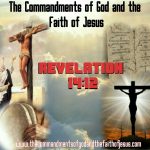
And lest someone thinks that that is not sufficient to establish the continuing importance of the Sabbath, it is clearly stated that those who will overcome the Mark of the Beast crisis in the last days would be those who “keep the commandments of God, and the faith of Jesus” (Rev. 14:12). There are no commandments that could better qualify to be regarded as the “commandments of God” more than the Ten Commandments and the Sabbath commandment is the fourth of the ten. So, God’s instruction that we keep the Sabbath still stands.
Think again
So, back to our main question: Why should we keep the Sabbath? We should keep the Sabbath because God says we should keep it. Now, people can say that we are not saved by keeping the commandments and insist that our works do not save us, but the more critical issue is: Can we choose to disobey or ignore God’s instructions and dare to think that God will welcome us into heaven? Think again!
We must ask ourselves whether we do good service to the billions of people who claim to have accepted Jesus but are disobeying God’s instruction to keep the seventh-day Sabbath when we tell them that we are saved by grace alone and that our salvation is not in any way dependent on what we do. When we tell people that we do not keep the commandments to be saved, that we only keep them because we are saved, are we speaking the honest truth or are we playing games? Since we are already saved without needing to commit ourselves to keep God’s commandments, can we then choose to ignore them? We must ask ourselves whether keeping the Sabbath is just a good thing to do or whether it is something that God also requires of us. And finally, we must ask ourselves whether we can claim a place in God’s kingdom if we choose to ignore an explicit instruction from God to keep the seventh-day Sabbath.
“And the times of this ignorance God winked at; but now commandeth all men every where to repent” – Acts 17:30.
“He that hath ears to hear, let him hear” (Matt. 11:15).
- Zerubbabel (Zech. 4:6)
Previous presentations can be found at http://thecommandmentsofgodandthefaithofjesus.com/
Preparing for the final crisis
The Bible speaks of a time of trouble before us that is worse than anything that has ever been seen in the history of the world. This will be the final crisis that God’s people will face just before deliverance at the second coming of Christ. We are told:
“and there shall be a time of trouble, such as never was since there was a nation even to that same time: and at that time thy people shall be delivered, every one that shall be found written in the book.” (Dan. 12:1).
For many people, life is fairly normal but it will not necessarily remain that way for very long. Trouble is brewing in the world and it is all pointing in the direction that has been prophesied. We do not know when the crisis will break, but the systems are slowly but surely being put in place. The final crisis is described as one in which no one will be able to buy or sell unless they have the Mark of the Beast. Eventually, those who do not conform to that system will be put to death. The Bible speaks of a super power in the world that will enforce the system of the Mark of the Beast as follows:
“And he had power to give life unto the image of the beast, that the image of the beast should both speak, and cause that as many as would not worship the image of the beast should be killed. And he causeth all, both small and great, rich and poor, free and bond, to receive a mark in their right hand, or in their foreheads: And that no man might buy or sell, save he that had the mark, or the name of the beast, or the number of his name.” (Rev. 13:15-17).
Now more than ever
There was never a time in the history of the world when the available technology made it as possible for persons to be tracked and for people’s ability to buy and sell to be controlled. There has never been as much worldwide fear of terrorism and a willingness of persons to fall in line with the systems of this world in order to secure their own safety. The Mark of the Beast involves a system of conformity worldwide in breach of at least one of God’s Commandments. The main characteristics of those who will overcome the Mark of the Beast are that they “keep the commandments of God, and the faith of Jesus.” (Rev. 14:12).
There is only one commandment that is universally breached in a manner that fits the description. It is the fourth of the Ten Commandments that involves keeping the seventh-day Sabbath. We are told:
“The Sabbath will be the great test of loyalty, for it is the point of truth especially controverted. When the final test shall be brought to bear upon men, then the line of distinction will be drawn between those who serve God and those who serve Him not. While the observance of the false Sabbath in compliance with the law of the state, contrary to the fourth commandment, will be an avowal of allegiance to a power that is in opposition to God, the keeping of the true Sabbath, in obedience to God’s law, is an evidence of loyalty to the Creator. While one class, by accepting the sign of submission to earthly powers, receive the mark of the beast, the other, choosing the token of allegiance to divine authority, receive the seal of God.” (Ellen G. White, Great Controversy pg. 605)
It has been customary among Sabbath-keepers to identify the Mark of the Beast by a two-step process. First, they would use the characteristics given in Revelation 13 to identify the Beast and then they would look among the distinguishing features of that system to see what its mark is. This approach may become less and less palatable as time goes by as the world is moving in a direction that frowns upon anything that appears to speak against other religions. They see it as intolerance and hate speech. But the message must be presented. We must find creative ways of presenting the same message. Another approach has been used in a small 20-page booklet by Colin A. Gyles entitled “The Love Which Overcomes the Mark of the Beast”. It identifies the Mark of the Beast based on the commandment involved, without getting into the matter of who the Beast is. This approach may become more and more useful as time progresses.
God’s people in the last days
God’s people in the last days were given the name Seventh-day Adventists because it identifies the two distinctive features of faith in the last days –
“We are Seventh-day Adventists. This is a fitting name, for we keep the Seventh-day Sabbath, and look for the second advent of our Lord in the clouds of heaven, with power and great glory. Even with respect to the name indicating some of the peculiar points of faith distinguishing us from other Christians, we are denominational. In keeping the Sabbath that God declares should be kept holy as a sign between Himself and His people, we show to the world that we are His peculiar people, chosen people – a people whom He has denominated.” (Ellen G. White, Manuscript Releases Vol. 19 pg 40)
“Do not these words point us out as God’s denominated people? And do they not declare to us that so long as time shall last, we are to cherish the sacred, denominational distinction placed on us? The children of Israel were to observe the Sabbath throughout their generations ‘for a perpetual covenant.’ The Sabbath has lost none of its meaning. It is still the sign between God and His people, and it will be so forever.” (Ellen G. White, Review and Herald, 8/4/1904)
Quite distinct from God’s denominated people, the wine of Babylon, which identifies the other side of the controversy, is specifically the doctrines of Sunday sacredness and the immortality of the soul. We are told:
“The wine of Babylon is the exalting of the false and spurious sabbath above the Sabbath which the Lord Jehovah hath blessed and sanctified for the use of man, also [it is] the immortality of the soul. These kindred heresies, and the rejection of the truth, convert the church into Babylon.” (Ellen G. White, Selected Messages Vol. 2 pg. 68).
Press together and respect religious liberty
Based on these clear distinctions, the Seventh-day Adventist Movement is clearly not Babylon. We must recognise this and unite around the things that are important in these last days. The Bible says that “there are differences of administrations, but the same Lord.” – 1 Cor. 12:15. There are those who would insist that all evangelistic work must be done under one administrative structure but this posture is not supported in Scripture. In fact, Jesus, in responding to a situation that was brought to His attention clearly says otherwise – “And John answered and said, Master, we saw one casting out devils in thy name; and we forbad him, because he followeth not with us. And Jesus said unto him, Forbid him not: for he that is not against us is for us.” (Luke 9:49, 50).
As believers in the Third Angel’s Message, we need to recognize that when the crisis breaks, which we are told by the prophet Ellen G. White will come as “an overwhelming surprise”, it will be against all Sabbath-keeping Adventists. No distinction will be made. Efforts at quenching the zeal of those who would advance the message are contrary to the principles of religious liberty and can only divide us and make us more vulnerable to be overcome by the powers of the world. We are admonished:
“The great work from which the mind should not be diverted, is the consideration of our safety in the sight of God. The storm is coming, relentless in its fury. Are we prepared to meet it? Are our feet on the Rock of Ages? Are we one with Christ, as he is one with the Father?” (Ellen G. White, Review and Herald, Dec. 27, 1898; Mar. 108)
“The watchmen must sound the alarm. If men are at ease in Zion somebody must be awake to give the trumpet a certain sound. Let the blaze of the beacon light be seen everywhere. Let the ease-loving awake, the tranquil be disturbed, and let them labor for religious liberty. And after we have done all we can, then leave our Lord to do His work. (Ellen G. White, Manuscript releases Vol. 16 pg. 239.)
May the Lord help us to play our part in advancing His cause.
“He that hath ears to hear, let him hear” (Matt. 11:15).
- Zerubbabel (Zech. 4:6)
Previous presentations can be found at http://thecommandmentsofgodandthefaithofjesus.com/
Number your days

There are many different views as to what is our true or intended lifespan. But whatever view we take, the following description by the Psalmist has remained approximately true from generation to generation and from culture to culture: “The days of our years are threescore years and ten; and if by reason of strength they be fourscore years, yet is their strength labour and sorrow; for it is soon cut off, and we fly away.” – Ps. 90:10. If we were to number our days, we’ll find that seventy or eighty years are about 25,600 to 29,200 days. We can be generous and say that it is roughly thirty thousand (30,000) days or about eighty two (82) years and a few months. Some persons live a little longer and many die younger. The question is, what can we really do with the days that we have?
An analogy might help to give perspective to the question. Suppose at birth, we are given thirty thousand dollars ($30,000) and we are told that that is all we will have to last us for our entire lifetime. If we invest it well, we may get one or two thousand dollars ($1000 or $2000) more, which is what a few more years beyond 82, would equate to. The good thing, however, is that you have an offer of getting an unlimited amount, depending on how you use the roughly 30,000 that you have. That is the promise of eternal life that is open to every person who has ever lived on this earth. What would be your choice? Would you seek to maximize your returns on $30,000, which at best may give you a few thousand dollars more or would you focus on devoting your 30,000 to securing the unlimited supply?
Unlimited supply
I think the wiser course is obviously is to seek the unlimited supply. For this reason, the Biblical advice is to “Lay not up for yourselves treasures upon earth, where moth and rust doth corrupt, and where thieves break through and steal: But lay up for yourselves treasures in heaven, where neither moth nor rust doth corrupt, and where thieves do not break through nor steal” – Matt. 6:19, 20.
It raises the question: What is required to obtain the unlimited supply of days? The answer is righteousness. And what is righteousness? Righteousness is doing what God says – “Not every one that saith unto me, Lord, Lord, shall enter into the kingdom of heaven; but he that doeth the will of my Father which is in heaven.” (Matt. 7:21). The greatest motivation to do what God says is to believe God when He speaks. It is said of Abraham that “Abraham believed God, and it was counted unto him for righteousness.” – Rom. 4:3. Because Abraham believed God that God would make of Isaac a great nation, he obeyed God and offered up Isaac on Mount Moriah, “Accounting that God was able to raise him up, even from the dead” (Heb. 11:19). Abraham’s obedience demonstrated the extent to which he believed God. Hence, Abraham has been regarded as the father of the faithful – an exemplar of faith.
When all is said and done, there is nothing more important than eternal life. Jesus said: “But seek ye first the kingdom of God, and his righteousness; and all these things shall be added unto you.” (Matt. 6:33). He further said: “Blessed are they which do hunger and thirst after righteousness: for they shall be filled.” (Matt. 5:6).
Hungering and thirsting
Are people hungering and thirsting after righteousness today? People seem to be hungering and thirsting more for power! For some, it is the power that comes from having money. For others, it is political power or other forms of power that give them authority over other people. For some, it is the power to work miracles. But all of these forms of power are limited in their scope to the roughly 30,000 days that we already have, granting that we do not foolishly squander them or carelessly lose them. Isn’t eternity much better?
What is this big thing about healing the sick and raising the dead? Will the person then live to even 120 years? Not likely! They will still die! Then what? If God fails to grant our request for a miracle, do we then lose faith? In days gone by, people used to enquire of the Lord. Nowadays, people just seem to assume that they know what is in God’s mind. Clearly, we are not as wise as God. And if prophets to whom God spoke directly had to enquire of God, then who are we to think that we already know? Even if there is a general promise, time and circumstances require wisdom that comes from God, to determine what is most appropriate.
Seek righteousness
The apostle Paul encourages us to not sorrow as those who have no hope (1 Thess. 4:13). Eternity is available to us and nothing else matters as much. The ticket is righteousness, and we do not need more than our 30,000 days to purchase it. Some people think that Christ has already purchased it for everybody. The Bible teaches otherwise. Christ has purchased the opportunity, not the right for everyone to enter. With the opportunity purchased for us, we must seek righteousness. We are told: “Blessed are they that do his commandments, that they may have right to the tree of life, and may enter in through the gates into the city.” (Rev. 22:14). If we hunger and thirst for righteousness, we will be filled.
In the final analysis, we are invited to heed the admonition of the Psalmist: “So teach us to number our days, that we may apply our hearts unto wisdom.” (Ps. 90:12). If, at the end of our days, we find that we would have wrought miracles and even done many wonderful works but we did not seek and obtain righteousness, all would have been lost.
“He that hath ears to hear, let him hear” (Matt. 11:15).
- Zerubbabel (Zech. 4:6)
Two major threats to the faith
Among the various threats that were faced by the early church, there were two major internal threats to the faith of which warnings were given. The threats were, false teachers who, on the one hand would unsettle the faith of especially young converts and then, leaders, on the other hand, who would shift the landmarks and cause the entire church to drift away into apostasy. There has always been much vigilance in looking out for those who would have “crept in unawares” (Jude 1:4) and are described by Jesus as “false prophets, which come to you in sheep’s clothing, but inwardly they are ravening wolves” (Matt. 7:15). However, there has been less vigilance in looking out for leaders who have apparent legitimacy but gradually influence the church to lose confidence in the pillars of faith that were established by the apostles and pioneers who suffered and died to lay the foundations. We’ll be focussing briefly on both threats that face us today.
False teachers
The Apostle Paul warned of false teachers in the following words: “For I know this, that after my departing shall grievous wolves enter in among you, not sparing the flock.” – Acts 20:29. One of the tell-tale signs of such false teachers was that they led young converts back to the sinful ways that they had forsaken when they came out of the world and into the church. Speaking of such false teachers, the Apostle Peter indicates that “While they promise them liberty, they themselves are the servants of corruption” (2 Peter 2:19). He further warned of the outcome for those who are misled by such false teachers. Peter said: “For if after they have escaped the pollutions of the world through the knowledge of the Lord and Saviour Jesus Christ, they are again entangled therein, and overcome, the latter end is worse with them than the beginning. For it had been better for them not to have known the way of righteousness, than, after they have known it, to turn from the holy commandment delivered unto them.” – 2 Peter 2:20, 21.
The ultimate danger from false teachers, as Peter said, is that they lead us away from “the holy commandments” (2 Peter 2:21). This warning echoes the words of Isaiah that: “To the law and to the testimony: if they speak not according to this word, it is because there is no light in them.” – Isa. 8:20.
Shifting landmarks
The Apostle John warned of another threat that would cause the church to drift away from the faith. This threat came from persons who were considered legitimate leaders but who used their authority to marginalize those who were zealous for the faith that was previously established. John spoke of one such case. He said: “I wrote unto the church: but Diotrephes, who loveth to have the preeminence among them, receiveth us not. Wherefore, if I come, I will remember his deeds which he doeth, prating against us with malicious words: and not content therewith, neither doth he himself receive the brethren, and forbiddeth them that would, and casteth them out of the church. – 3 John 9, 10.
The Jerusalem Council
Many reformers, especially during the Protestant Reformation, having seen that the church had drifted away from the truth and sought to warn the church, were seen as false teachers and were excommunicated or disfellowshipped from the church, even being put to death in many instances. The Apostle Paul faced a similar situation when he preached among the Gentiles the message that God gave him. The Gentiles accepted the truth that Paul preached, “But there rose up certain of the sect of the Pharisees which believed, saying, That it was needful to circumcise them, and to command them to keep the law of Moses.” – Acts 15:5. The church addressed the matter in a way that sets an example of how differences of views in the church should be resolved. They convened a Council at Jerusalem with the leaders and the most experienced among them to give the matter a hearing, consider the matter and have the issues resolved (Acts 15:1-32). At the end of the Jerusalem Council, the church moved on in unity.
Change in belief and new Baptismal Vows
In God’s remnant church today, a situation exists where believers, who have been faithful to the foundation principles laid down by the pioneers (which were reflected in the Baptismal Vows to which they indicated their agreement when they accepted the faith), have found their faithfulness being brought into question because at least one landmark has been shifted.
Many believers accepted the faith when the beliefs of the church, as they were written on the then Certificate of Baptism in the 1970s and even later, read as follows:
“The following is a brief summary of the doctrinal beliefs of Seventh-day Adventists, together with some of the Scriptural references upon which they are based:
- The true and living God, the first person of the Godhead, is our heavenly Father, and He, by His son, Christ Jesus, created all things. (Matt. 28:18, 19; 1 Cor. 8:5, 6; Eph. 3:9; Jer. 10:10-12; Heb. 1:1-3; Acts 17:22-29; Col. 1:16-18.)”
– Certificate of Baptism, prepared by the General Conference of Seventh-day Adventists, Takoma Park, Washington, D.C. 20012.
The first statement on the Baptismal Vows, at the back of the Certificate of Baptism, to which converts were required to indicate their agreement reads:
“1. I believe in God the Father, in His Son Jesus Christ, and in the Holy Spirit.”
– Certificate of Baptism, Prepared by the General Conference of Seventh-day Adventists, Takoma Park, Washington, D.C. 20012.
The Baptismal Vows have changed and are now expressed in two forms, the extended version of thirteen statements and an alternative version that has three statements, both of which reflect that the concept of God has changed.
The extended version of the Baptismal Vow reads as follows:
“1. Do you believe there is one God: Father, Son, and Holy Spirit, a unity of three coeternal Persons?” – Seventh-day Adventist Church Manual, Published by the Secretariat, General Conference of Seventh-day Adventists.
The candidate will be required to answer in the affirmative and later sign the Certificate of Baptism and Commitment that reads:
“1. I believe there is one God: Father, Son, and Holy Spirit, a unity of three coeternal Persons.” – Seventh-day Adventist Church Manual, Published by the Secretariat, General Conference of Seventh-day Adventists.
New concept of God
In the past, the concept of God was that God was a personal being, the Father, Jesus Christ was the Son of God and the Holy Spirit was Christ’s representative. The new concept is that God is a unity, not a person per se but a unity of three. Notwithstanding the change, there are faithful believers who still hold to the Biblical view of the pioneers, as there is no statement anywhere in the Bible that says God is a unity of three. The clearest statement in the Bible of who God is, as was reflected on the older Certificate of Baptism, is 1 Cor. 8:5, 6, which reads:
“For though there be that are called gods, whether in heaven or in earth, (as there be gods many, and lords many,) But to us there is but one God, the Father, of whom are all things, and we in him; and one Lord Jesus Christ, by whom are all things, and we by him.” – 1 Cor. 8:5, 6.
Changing the concept of God is by no means a small change. Was there an equivalent of a Jerusalem Council where the matter was squarely considered? The answer is no. In 1980, the set of twenty-seven Fundamental Beliefs were voted at a General Conference session en bloc, without any indication that there was included in it a different concept of God. So, many persons were of the belief and many are still of the belief that the concept of God has remained the same. This is obviously not the case.
A few of the old-timers who are aware of the change and have remained steadfast to “the faith which was once delivered unto the saints” (Jude 1:3) have found that, in order to remain in good fellowship with the main body of believers they have to remain fairly quiet. This is not to say that they do not seek appropriate opportunities to bring the matter to the attention of the church without causing division. The church may be well advised to follow the example of the early apostolic church and honestly have a conversation on the matter that allows both the adherents of the faith of the pioneers as well as the proponents of the new position to have a voice.
In the final analysis, the church faces threats from many quarters, some external and some internal. It may be easy to label persons, who hold a view that is different from that which is popularly held, as false teachers, as was done to the Reformers who gave us the Protestant Reformation, but have we evaluated whether or not the landmarks of truth are being shifted?
“He that hath ears to hear, let him hear” (Matt. 11:15).
- Zerubbabel (Zech. 4:6)
The call and the sifting

It is generally understood and often repeated by professed Christians that it is by grace we are saved and not by our works. Being saved is seen as a present reality and not merely a promise of a future expectation. Notwithstanding, there is a clear reference in scripture to a promise of eternal life only for those who endure to the end. We are told that “he that endureth to the end shall be saved.” – Matt. 10:22. The implication is that if we do not endure unto the end we will not be saved. How then can it be said that we are saved already but yet we need to endure to the end in order to be saved? Evidently, we have been saved from one thing already and there is something else that we have not yet been saved from, for which we need to endure to the end. We will now seek to identify and distinguish between the two.
The Bible teaches that people are called to become a part of the household of faith. In the days of ancient Israel, the literal descendants of Jacob were naturally a part of that community, while Gentiles were naturally aliens but could join if they were circumcised and they kept the Passover and all the other feasts. God’s promise to the stranger was that “Even unto them will I give in mine house and within my walls a place and a name better than of sons and of daughters” (Isa.56:5). God stated His intention that “mine house shall be called an house of prayer for all people.” – Isa. 56:7. This was not fully understood or embraced by ancient Israel, neither was the fact appreciated that the sacrifices were not ends in themselves but rather expressions of faith in the Messiah who was to come.
The plan was then changed by God, partly because the greater purpose was missed by the people. A new dispensation was created and in that new dispensation, in the New Testament, members of the household of faith were told: “For unto us was the gospel preached, as well as unto them: but the word preached did not profit them, not being mixed with faith in them that heard it.” – Heb. 4:2. In the new dispensation, the gospel was preached to the Jews who were already near and to the Gentiles who were considered to be afar off and they were all brought into a new body – not Gentiles being brought into the Jewish establishment as it was before, but both Jew and Gentile were being brought into a new body, the Church, on equal footing.
This new plan was specifically revealed to the Apostle Paul. He told the Gentile converts that this revelation was a special dispensation of grace that was given to him for them. He described it as a “dispensation of the grace of God which is given me to you-ward” (Eph. 3:2). This special dispensation of grace that was granted to him was a new revelation that had not been previously made known to the fathers or the prophets. He described it as a mystery that “from the beginning of the world hath been hid in God” (Eph. 3:9) and “Which in other ages was not made known unto the sons of men, as it is now revealed unto his holy apostles and prophets by the Spirit” (Eph. 3:5).
What was that mystery or special revelation that was called a dispensation of grace given to Paul for the Gentiles? Paul said it was “That the Gentiles should be fellowheirs, and of the same body, and partakers of his promise in Christ by the gospel: Whereof I was made a minister, according to the gift of the grace of God given unto me by the effectual working of his power. Unto me, who am less than the least of all saints, is this grace given, that I should preach among the Gentiles the unsearchable riches of Christ” (Eph. 3:6-9).
Saved from the world
By answering the call, we as Gentiles, are called out of the world and into the church. But the church must then be purified. We are told: “Husbands, love your wives, even as Christ also loved the church, and gave himself for it; That he might sanctify and cleanse it with the washing of water by the word, That he might present it to himself a glorious church, not having spot, or wrinkle, or any such thing; but that it should be holy and without blemish.” (Eph. 5:25-27). The process of cleansing or purifying the church does not involve only “the washing of water by the word”, which it is the privilege of every church member to benefit from, but it also involves a sifting – separation of the genuine from the false, sifting or separation of chaff from wheat, the well-known concept of separating the wheat from the tares (Matt. 13:24-30).
Being saved from the world and its debasing associations gives us hope of being saved from eternal damnation. So it’s a two-step process: from the world into the church and from the church into the eternal kingdom. It is the judgement that clears us for the eternal kingdom. The Bible says: “And as it is appointed unto men once to die, but after this the judgment” (Heb. 9:27).
There is a common mistake that professed Christians make in thinking that being saved from the world and being brought into the church automatically clears them for the eternal kingdom without their having to face the judgement. The basis of the misunderstanding is Paul’s words to the Ephesians where he says: “For by grace are ye saved through faith; and that not of yourselves: it is the gift of God: Not of works, lest any man should boast.” – Eph. 2:8, 9. Being saved, of which Paul speaks here, is popularly thought to be referring to being cleared for the eternal kingdom. It is not referring to that. It is referring simply to being saved out of the world and being brought into the church. As someone puts it, we are “saved from the ills of living contrary to God’s word” and we now have a hope of eternal life, whereas, before that, we were without hope in the world. This is what Paul describes in the same conversation to the Ephesians as follows:
“And you hath he quickened, who were dead in trespasses and sins; Wherein in time past ye walked according to the course of this world, according to the prince of the power of the air, the spirit that now worketh in the children of disobedience: Among whom also we all had our conversation in times past in the lusts of our flesh, fulfilling the desires of the flesh and of the mind; and were by nature the children of wrath, even as others. But God, who is rich in mercy, for his great love wherewith he loved us, Even when we were dead in sins, hath quickened us together with Christ, (by grace ye are saved;) And hath raised us up together, and made us sit together in heavenly places in Christ Jesus” (Eph. 2:1-6).
Paul describes a present reality of sitting “in heavenly places” just as the Psalmist David speaks of the blessing, in this life, that is obtained by “the man that walketh not in the counsel of the ungodly, nor standeth in the way of sinners, nor sitteth in the seat of the scornful.” – Psalm 1:1. But that person has to remain faithful to the end if he is to benefit beyond this life and be saved in God’s eternal kingdom. This is the very point that Paul went on to make to those Ephesians. He said:
Be ye therefore followers of God, as dear children; And walk in love, as Christ also hath loved us, and hath given himself for us an offering and a sacrifice to God for a sweetsmelling savour. But fornication, and all uncleanness, or covetousness, let it not be once named among you, as becometh saints; Neither filthiness, nor foolish talking, nor jesting, which are not convenient: but rather giving of thanks. For this ye know, that no whoremonger, nor unclean person, nor covetous man, who is an idolater, hath any inheritance in the kingdom of Christ and of God. Let no man deceive you with vain words: for because of these things cometh the wrath of God upon the children of disobedience. Be not ye therefore partakers with them. – Eph. 5:1-7.
Notice carefully that Paul warns the Ephesians, “Let no man deceive you with vain words”. We should interpret that to include such vain assertions that people make about us not being saved by works, to somehow suggest that our efforts to avoid committing sin are worthless. That was not what Paul was saying. He was by no means saying that striving to overcome sin is unnecessary or meaningless. All he was saying to those Ephesians was that it was by the dispensation of grace that God gave to him by way of a special revelation, which he shared with them, that they were saved from the corrupting practices of the world that they were previously living in. It was not by their works of seeking or by any other effort of their own that that particular grace was extended to them. Rather, the gospel was brought to them by God’s grace. Let us get the point and not be deceived. He made the same point in his letter to Titus as follows:
For the grace of God that bringeth salvation hath appeared to all men, Teaching us that, denying ungodliness and worldly lusts, we should live soberly, righteously, and godly, in this present world; Looking for that blessed hope, and the glorious appearing of the great God and our Saviour Jesus Christ; Who gave himself for us, that he might redeem us from all iniquity, and purify unto himself a peculiar people, zealous of good works.” – Titus 2:11-14.
“He that hath ears to hear, let him hear” (Matt. 11:15).
- Zerubbabel (Zech. 4:6)
Previous presentations can be found at http://thecommandmentsofgodandthefaithofjesus.com/
Is there any good reason for sin?
Is there any good reason for sin to have started in the first place and is there any good reason for it to continue? If we say no, then we need to at least offer some reasonable explanation as to why it has continued. The general belief among professed Christians is that God does not want sin to continue. Yet God is also perceived as being almighty, which is understood to mean that God can do anything. So the big question is why does God seem to tolerate sin for so long if He doesn’t like it and He is powerful enough to stop it? Could it be that we do not fully understand what sin is and what is required to stop it? These are the issues that we now seek to consider.
It is a common belief that when the Bible says that we were born in sin and shaped in iniquity, it is saying that sin is wrapped up in our very existence. So sin will continue just by virtue of the fact that we exist. But if that is true, and we cannot help but sinning because of who we are and how we were made, then how fair is it to expect us to not sin? That would appear to be an unreasonable expectation. But then, we say that Christ has taken away our sins by His death on the cross. But we still commit sin. So how is the sin taken away, which is to say that it is gone, but yet it is still here? Is it that we have a part to play in getting rid of sin, while we are here thinking that it is all left up to God?
We say that Christ has conquered sin at Calvary and all we need to do is to accept the work that has already been done on our behalf. All over the world, billions of people who claim to be Christians claim to have accepted this work that supposedly has already been done on their behalf, yet hardly any one of them will claim that sin is no longer in them. In fact they do the very same sinful things that the so-called sinner does. Quite contrary to such assertions, that all we need to do is to accept that the work of putting away sin has already been done on our behalf by Christ and we are saved, we see Christ himself declaring to people, who claim to have accepted Him, that He never knew them and that they are workers of iniquity! – Matt. 7:21-23. If we cannot help but work iniquity, can Christ then turn and blame us, even when we are claiming Him and saying, “Lord, Lord”?
We have a part to play
The truth is that we have a part to play in putting away sin. Christ cannot put away our sin unless we want to get rid of it. Putting away sin means that we are not only released from the guilt and penalty of past sins but we will no longer live a life of committing sin. It seems hard to accept as being possible but that is because we think that everything is sin. Everything is not sin! This is one of the main fallacies that make people feel hopeless and give up trying to live above sin because they think it is a futile effort. So they come up with the notion that we need not try. It is better to think that Christ has done it for us even though we see it not done.
In reality, there is no good reason for sin. Sin is rebellion against God. The process of putting away sin involves convincing the universe that there is no reason for sin. The process involves, first and foremost, discrediting Satan’s excuses for sin – proving that Satan is a liar and that he had no reason to rebel in the first place – hence, there is no reason to follow him. Calvary provides the argument. It proves that God is not selfish and that Satan killed the Son of God for no reason. Secondly, it has to be shown that God’s requirements are reasonable and not in any way onerous or out of reach – that God asks us to do nothing except to love others as we love ourselves and to love and respect him for who He is. If we love Him, we will keep His commandments “For this is the love of God, that we keep his commandments: and his commandments are not grievous” (1 John 5:3). In other words we will not sin, as sin is disobeying what God says, that is, transgressing God’s law or His instructions (1 John 3:4). When we recognize that God loves us, means us well and that He is infinitely wiser than us and know best how to run the universe, we will be motivated to do what He says.
God is unselfish and requires very little
God’s unselfishness is manifested in the fact that He gave up His only begotten Son and bore the anguish of seeing His only begotten Son suffer at the hands of sinners. The Bible says, “He that spared not his own Son, but delivered him up for us all, how shall he not with him also freely give us all things?” (Rom. 8:32). God’s unselfishness was also manifested in God’s only begotten Son, who is exactly like God in character, being willing to give up His very life. His Father loves Him even more for doing it. That is why Jesus said: ““Therefore doth my Father love me, because I lay down my life, that I might take it again.” (John 10:17). In honour of Jesus willingly giving up His life, His Father not only raised Him from the dead (Gal. 1:1), but has “highly exalted Him” (Phil. 2:9).
If we consider what God asks us to do, without adding anything to it, we will recognize that living without sinning is actually easy. All the commandments of God are summarized in two simple instructions: love God supremely and love your neighbour as yourself (Matt. 22:37-40). The Ten Commandments are simply an expanded version of the same concept – the first four commandments briefly describe love to God and the last six commandments describe love to our fellowmen. If we consider the way in which the commandments are given, God does not ask us to do anything that we can claim that it is beyond us to do. The commandments simply state the evil that we should not do. Are we saying that we must murder, dishonour our parents, tell lies on our neighbour, rob people, covet other people’s things, adulterate other men’s seed by going into their wives, can’t refrain from working one day, must worship other gods, blaspheme God and worship graven images? Oh, we may say it’s not that simple. But where did we get that from? Oh, we may say that Jesus said we sin even in our thoughts. Yes, so do we have to embrace doing any of those things in our hearts? We don’t have to. Let no one fool us by complicating what God asks for.
No good reason
The bottom line is that there is no good reason to sin and we can live without sinning, based on what God says that sin is. If we complicate the matter and think that everything is sin, we will think that we might as well do evil things because even if we try not to sin, we still can’t please God. That is a lie from the pit of hell. That was the thinking of the Scribes and Pharisees, why they accused Jesus of being a sinner. By their definition, Jesus was not only a sinner, but they went as far as to claim that he had a devil and was the son of Beelzebub, the chief of devils. And what did He do to justify such accusations? Did He worship any other God but the Father in heaven? Did He bow down and worship Satan or any image representing anything? Did He curse God? Did He work on the Sabbath? Did He dishonour His mother or Joseph? Did He rob anybody? Did He take away any man’s wife? Did He tell lies on anybody or kill anybody? Did He covet anybody’s things? No, He did not! He was kind, and went out of His way to help people. He loved and worshipped God, His Father. Yet they said He was a sinner. And now, through the same thinking, people are being told that they cannot stop sinning.
Whether or not we want to accept it, one day human probation will close and God will declare some unjust, some filthy, some righteous and some holy (Rev. 22:11). It is our decision where we will fall. Many will be killed – beheaded, because they will not worship the Beast and his Image neither will they receive the Mark of the Beast (Rev. 20:4). Notwithstanding, a hundred and forty and four thousand people will be found to be without guile and without fault when Jesus Christ returns (Rev. 14:5) because they would have washed their robes and made them white, quite distinct from those who would have died and received white robes (Rev. 7:14; Rev. 6:11). May the Lord help us to recognize that there is no good reason for sin.
“He that hath ears to hear, let him hear” (Matt. 11:15).
- Zerubbabel (Zech. 4:6)
Previous presentations can be found at http://thecommandmentsofgodandthefaithofjesus.com/
If you are saved do you need to repent again?
To accept Christ, people are encouraged to say a simple prayer indicating that they have repented of their sins and to ask Christ to come and live in their hearts. Having done that, persons are given the assurance that they are saved. A few questions now arise; do they need to repent of future sins? What if they don’t? Do they lose salvation? If they do, was the salvation conditional? We’ll now examine these questions.
There was a time when priests used to offer what were called indulgences. These were said to provide pardon for sins that people committed. A problem arose in that people were obtaining indulgences even before they committed the sins. This gave them a sense of security, such that, there was no need to repent of sins that they committed afterwards or seek forgiveness for those sins as long as they already had an indulgence or previously secured pardon. This matter caused conscientious people to protest. The result was what was called the Protestant Reformation.
The indulgences were being sold by the priests but that is not the aspect of the matter that is now being looked at. We can establish that forgiveness cannot be bought with money. There is also the issue of whether a human priest can pardon sins but that is a different discussion as well, which we will not get into just now. The issue at hand is simply whether or not forgiveness for sins of the past provides forgiveness for sins of the future or whether forgiveness can be obtained for sins before those sins are committed. If we say that we have repented and we are saved, are we clear of all future condemnation even if we sin after that? Someone may say if you are saved you will repent. But that does not answer the question. Based on that argument, it would also be true to say that if you are saved and Christ lives in your heart you will not sin. But we all sin. So is it that nobody is saved? Or is it that you are saved whether or not you continue to sin? Surely, we would not be suggesting that there needs be no difference in behaviour between the saved and the unsaved.
The truth is that forgiveness for sins of the past does not provide forgiveness for sins of the future and it is not true to say that once forgiven you are always forgiven. The Bible says that we should not sin but if we sin, we have an advocate with the Father (1 John 2:1). Additionally, Jesus says that if we do not forgive others, our Father in heaven will not forgive us (Matt. 6:14, 15). This was further explained by a parable in which Jesus spoke of a servant who was about to be sold along with his wife, his children and all his possessions in order to pay a debt that he owed (Matt. 18:21-35). But he asked for forgiveness and his lord forgave him the entire debt. The man then went out and saw a fellow servant who owed him a small sum. He insisted that his fellow servant be sent to prison because he was unable to pay, even though his fellow servant asked him to be patient with him. When his lord heard what he did to his fellow servant, his lord retracted his previous position of forgiving him his debts and ordered him to be delivered to the tormentors till he should pay all that he owed. Jesus then went on to say that, “So likewise shall my heavenly Father do also unto you, if ye from your hearts forgive not every one his brother their trespasses.” (Matt. 18:35).
This would indicate that forgiveness is on condition that you do not continue to sin. Sin is disobedience to God’s instructions (1 John 3:4). God’s moral instructions are summarized in the Ten Commandments. God has made provision for us to live above sin. We are told that the gifts of the spirit are given for the “perfecting of the saints” so that we can come to the “measure of the stature of the fullness of Christ” (Eph. 4:13, 14). Jesus has told us, further, that our Father in heaven will not withhold the Holy Spirit from us if we ask Him (Luke 11:13). In the final analysis, we are admonished to be kind to one another and forgive one another, even as God for Christ’s sake has forgiven us (Eph. 4:32).
“He that hath ears to hear, let him hear” (Matt. 11:15).
- Zerubbabel (Zech. 4:6)
What does it mean to be saved?
It is very common to hear professed Christians say that they are saved or that they have been saved from sin. But at the same time, they still consider themselves sinners and admit that they still fall into sin. They will also admit that they are still affected negatively by sin around them. So, what then does it mean to be saved? In this presentation it will be shown that salvation has three parts to it and that atonement for past sins is only one part, which many professed Christians often refer to when they say that they are saved, without recognizing the other two parts.
Salvation means deliverance or rescue. Atonement means reparation for an offense or injury. When there is no offense or injury, there is no need for atonement. But if one is in danger, whether or not one has offended, one needs salvation. If Christ has forgiven you of all your past sins and you are saved from the penalty of those sins, you still need to be saved from the power of sin so that you are able to live without committing more sins. Further, you still need to be saved from the presence of sin around you so that you are not in danger of being robbed, murdered or in any other way negatively affected by sin. Hence, complete salvation from sin requires that we be saved from the three ‘p’s – the penalty, the power and the presence of sin.
Atonement – Salvation from the Penalty of Sin
Atonement is for the purpose of securing salvation from the penalty of sin – the first ‘p’. The Bible speaks of atonement as the intercessory work that a priest does on behalf of someone who has done something wrong, for the purpose of securing forgiveness for that person – “27 And if any one of the common people sin through ignorance, while he doeth somewhat against any of the commandments of the Lord concerning things which ought not to be done, and be guilty; 28 Or if his sin, which he hath sinned, come to his knowledge . . . . . 35 the priest shall make an atonement for his sin that he hath committed, and it shall be forgiven him.” (Lev. 4:27-35).
Christ earned the right to intercede on our behalf because He was tempted just as we are tempted and yet did not sin – 15 For we have not an high priest which cannot be touched with the feeling of our infirmities; but was in all points tempted like as we are, yet without sin.” (Heb. 4:15). Further, by allowing himself to be killed by Satan and his wicked agents without the slightest justification for Satan’s doing so, He has showed the extent of His love and His Father’s love for us and has exposed Satan to the entire universe as a liar and a murderer. We are told:
“13Greater love hath no man than this, that a man lay down his life for his friends.” (John 15:13).
“16 For God so loved the world, that he gave his only begotten Son, that whosoever believeth in him should not perish, but have everlasting life.” (John 3:16).
“32 He that spared not his own Son, but delivered him up for us all, how shall he not with him also freely give us all things?” (Rom. 8:32).
David’s weeping on account of the death of his son Absalom gives just a faint glimpse of what may have happened when God turned His face away from beholding the death of His only begotten Son – “33And the king was much moved, and went up to the chamber over the gate, and wept: and as he went, thus he said, O my son Absalom, my son, my son Absalom! would God I had died for thee, O Absalom, my son, my son!” (2 Sam. 18:33). “4But the king covered his face, and the king cried with a loud voice, O my son Absalom, O Absalom, my son, my son!” (2 Sam.19:4).
Some people tend to think of God as an emotionless ethereal entity. But God is a Person and He has feelings. In vision, Ellen G. White saw God’s pain and described it as follows:
“The Eternal Father, the unchangeable one, gave his only begotten Son, tore from his bosom Him who was made in the express image of his person, and sent him down to earth to reveal how greatly he loved mankind.” (Review and Herald, July 9, 1895, pr.14).
Again, she wrote:
“Said the angel, “Think ye that the Father yielded up His dearly beloved Son without a struggle? No, no.” It was even a struggle with the God of heaven” (Early Writings p. 127.).
By the death of Christ, Satan has been unmasked before the entire universe and his condemnation is ascertained. In the judgement, he will be condemned and the kingdom of this world will be taken from him. (Dan. 7:26, 27).
14 Forasmuch then as the children are partakers of flesh and blood, he also himself likewise took part of the same; that through death he might destroy him that had the power of death, that is, the devil (Heb. 2:14).
15 And having spoiled principalities and powers, he made a shew of them openly, triumphing over them in it.” (Col. 2:15).
26 But the judgment shall sit, and they shall take away his dominion, to consume and to destroy it unto the end. 27 And the kingdom and dominion, and the greatness of the kingdom under the whole heaven, shall be given to the people of the saints of the most High, whose kingdom is an everlasting kingdom, and all dominions shall serve and obey him.” (Dan. 7:26, 27).
The pagan concept of atonement is that of blood being shed to appease an angry god. The Biblical concept of atonement, however, is that of Christ interceding on behalf of the sinner, presenting arguments for the sinner before God, and ultimately to the entire universe. In the first instance, the argument is for the sinner to be forgiven based on two things: one, the sinner’s repentance and two, Christ taking the sin on Himself as the ‘responsible officer’, so to speak, being the second Adam, or the new head of humanity. In the second instance, the argument is that Satan is the real instigator who deceived us and caused us to sin and therefore is the real culprit who should bear the responsibility and hence the penalty. Thus, in the earthly sanctuary’s representation of the reality, after the priest makes an atonement for the sinner and the sinner is forgiven, at the end of the year, all sins that were previously confessed, were then placed, by the priest (representing Christ), on the head of the scapegoat (representing Satan) and the goat bearing the sins is removed from the camp (Lev. 16:20-22).
Salvation from the Power and Presence of Sin
Salvation from the power of sin – the second ‘p’, is secured by the gifts of the spirit. We are told:
8 Wherefore he saith, When he ascended up on high, he led captivity captive, and gave gifts unto men. . . . 11 And he gave some, apostles; and some, prophets; and some, evangelists; and some, pastors and teachers; 12 For the perfecting of the saints, for the work of the ministry, for the edifying of the body of Christ: 13 Till we all come in the unity of the faith, and of the knowledge of the Son of God, unto a perfect man, unto the measure of the stature of the fulness of Christ: 14 That we henceforth be no more children, tossed to and fro, and carried about with every wind of doctrine, by the sleight of men, and cunning craftiness, whereby they lie in wait to deceive; 15 But speaking the truth in love, may grow up into him in all things, which is the head, even Christ” (Eph. 4:8, 11-15).
Salvation from the presence of sin – the third ‘p’, is secured by God changing us from mortal to immortal at the second coming of Christ and afterwards creating a new heaven and a new earth for us to live in forever. We are told:
51 Behold, I shew you a mystery; We shall not all sleep, but we shall all be changed, 52 In a moment, in the twinkling of an eye, at the last trump: for the trumpet shall sound, and the dead shall be raised incorruptible, and we shall be changed. 53 For this corruptible must put on incorruption, and this mortal must put on immortality. 54 So when this corruptible shall have put on incorruption, and this mortal shall have put on immortality, then shall be brought to pass the saying that is written, Death is swallowed up in victory.” (1 Cor. 15:51-54).
Also:
1And I saw a new heaven and a new earth: for the first heaven and the first earth were passed away; and there was no more sea. 2 And I John saw the holy city, new Jerusalem, coming down from God out of heaven, prepared as a bride adorned for her husband. 3 And I heard a great voice out of heaven saying, Behold, the tabernacle of God is with men, and he will dwell with them, and they shall be his people, and God himself shall be with them, and be their God. 4 And God shall wipe away all tears from their eyes; and there shall be no more death, neither sorrow, nor crying, neither shall there be any more pain: for the former things are passed away. 5 And he that sat upon the throne said, Behold, I make all things new.” (Rev. 21:1-5).
Some people think that God is dwelling with us now. But God is in heaven. He will dwell with us then. Christ is gone to the Father in heaven and will return to take us to Him. Then the Father and the Son will come back to earth to dwell with us. In the meantime, Christ has not left us comfortless. He is with us in the person of His representative, the Comforter, who will be with us until He returns. The angels are ascending and descending between us and Christ, ministering to us and passing on to us the blessings that Christ secures from the Father for us.
May the Lord help us to repent of our sins so that we may be saved from the penalty of sin and may we pray to God for His Spirit that we might develop perfect characters and be saved from the power of sin in our lives so that when Christ returns we might be saved from the presence of sin and will live with God, with Christ, with the holy angels and with the host of the redeemed throughout eternity.
“He that hath ears to hear, let him hear” (Matt. 11:15).
- Zerubbabel (Zech. 4:6)
Christ in You – What does it mean?
Christ in You – What does it mean?
It is very common for professed Christians to speak about Christ being in them or the Holy Spirit living in them or similar expressions. But it is clear that there is no consistent understanding by all as to what is meant by such expressions. In one case, it is meant that the character of Christ is in you while in the other case it is meant that Christ personally is inside of you. We’ll examine both concepts.
The first idea is hinged on the view that Christ is a person with bodily form, who can be touched, as Thomas was told to touch Him and see that He is real. Within this perspective, it is understood that Christ left and went back to heaven and has promised to return. We await His return. He has, however, sent the Comforter as His representative to minister to us through the constant companionship of our personally assigned guardian angel and other angels who go back and forth between us and Christ in heaven. Christ is in heaven advocating on our behalf before His Father. By our constant interaction with God and Christ through their representatives, we receive light, love and power that transform us so that we become like Christ in character. In this sense, God and Christ dwell in us. God, the Father, is referred to in Scripture as the eternal spirit and Jesus Christ, the only begotten son of God, is the express image of His Father’s person.
The second idea is hinged on the view that Christ is personally everywhere. So, even though He has a body, His body is really just an image through which He chooses to manifest himself because he is simultaneously elsewhere in other bodies, speaking and acting personally. This is a form of what is called pantheism. This view is unscriptural, it makes the work of angels redundant, it makes the Father redundant and it promotes image worship. There are some other issues that arise from this second idea and these will now be further discussed.
This second idea results in what the Bible describes as people having a form of godliness but denying the power to perfect Christian character. It is felt that Christians cannot be perfect in character – that, only Christ can be perfect in character, and so unless He lives inside of us and acts through our bodies, no perfection of character can be manifested in us. This makes our minds redundant.
This view, further, maligns Christ by associating Christ with our misbehaviour. If Christ is personally inside of you, directing your behaviour then your misbehaviour is Christ’s misbehaviour. If your misbehaviour is your own and not Christ’s then Christ is taking turns with you (or with Satan inside of you) in directing your behaviour – still maligning Christ. The Bible says we should not be “unequally yoked together with unbelievers: for what fellowship hath righteousness with unrighteousness? and what communion hath light with darkness?” (2 Cor. 6:14). But the truth is that Christ has no fellowship with evil, for “If we say that we have fellowship with him, and walk in darkness, we lie, and do not the truth” (1 John 1:6).
This second idea also sets the stage for idolatry. If Christ is inside of you then what prevents someone from bowing down before you and worshipping Christ inside of you? Why look to Christ in heaven? If He is here, why not worship Him and look to Him here, where He is?
Another issue arises, if Christ lives inside everyone who asks Him then every professed Christian is saved. But the Bible clearly teaches that many will take unto themselves the name of Christ and He will say to them that He never knew them (Matt. 7:20-27).
This error takes away our responsibility to live a holy life and places it on Christ. Christ would have no moral authority to hold you accountable for your actions. Once you say, take me Lord, live in me and make me righteous, either He is going to refuse and leave you unrighteous or He is going to accept your invitation and make you righteous. You would have done your part. So, in either case, any failure in you to be righteous would be Christ’s failure.
The Biblical truth is stated clearly as follows:
“For the grace of God that bringeth salvation hath appeared to all men, Teaching us that, denying ungodliness and worldly lusts, we should live soberly, righteously, and godly, in this present world; Looking for that blessed hope, and the glorious appearing of the great God and our Saviour Jesus Christ; Who gave himself for us, that he might redeem us from all iniquity, and purify unto himself a peculiar people, zealous of good works. These things speak, and exhort, and rebuke with all authority. Let no man despise thee.” (Titus 2:11-15).
We are further told:
“The expulsion of sin is the act of the soul itself. True, we have no power to free ourselves from Satan’s control; but when we desire to be set free from sin, and in our great need cry out for a power out of and above ourselves, the powers of the soul are imbued with divine energy of the Holy Spirit, and they obey the dictates of the will in fulfilling the will of God.” – Ellen G. White, The Desire of Ages, pg. 465-466.
“He that hath ears to hear, let him hear” (Matt. 11:15).
- Zerubbabel (Zech. 4:6)